
A Roof Beyond the Tide
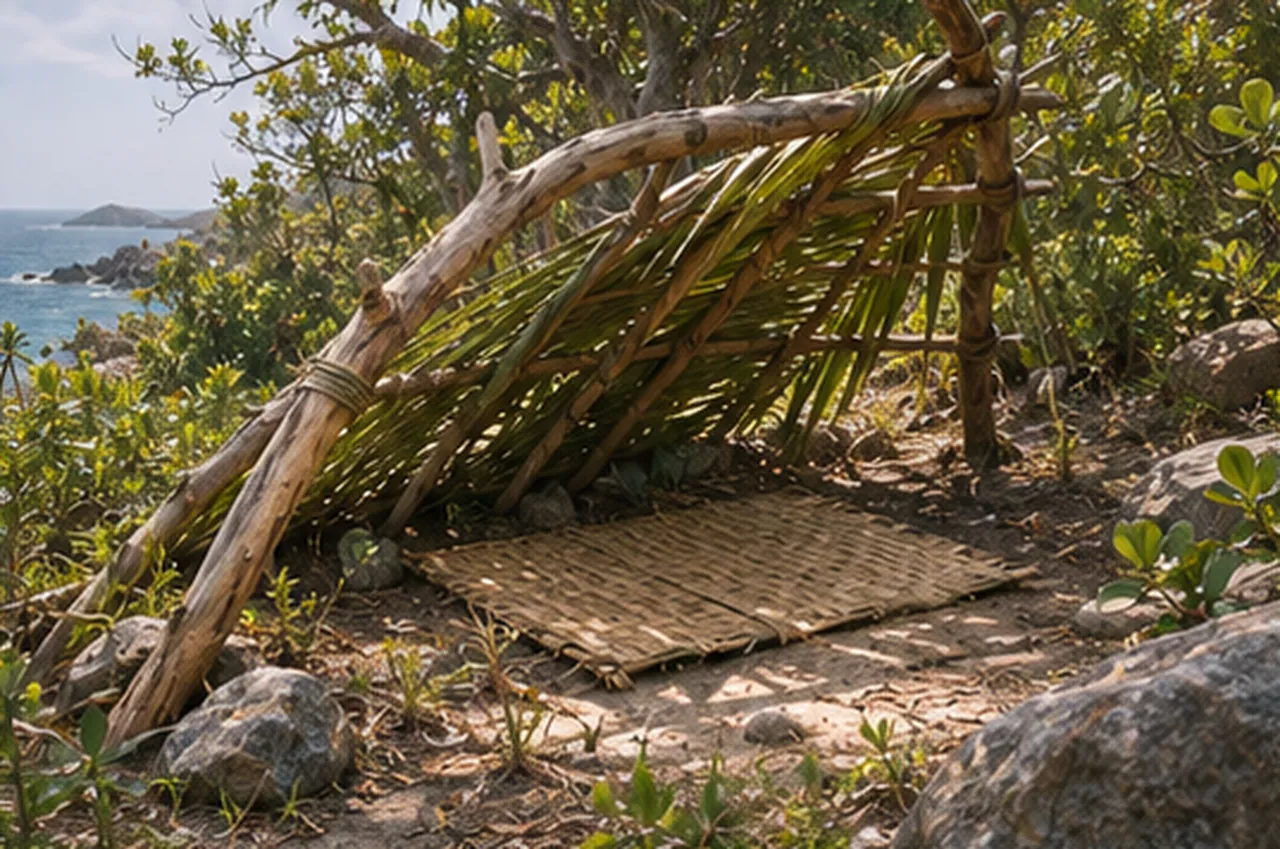
The first footprint is close to a rock whose top is dry. A lower edge around the rock is covered by a thin dark line. Above this part of the shore is a shelf of ground with room for a small roof. The castaway can bring a bundle of things upward or put a rough cover near the easier stretch of beach. Both places can work during the early part of the scene. The game asks where you can still finish moving your load once the water shifts. A Roof Beyond the Tide is a fictional shelter design prototype about the connection between the site of a short camp and the routes that remain open to it.
Read the older line below the shelf
The lower cove has more than one visible wet band. Find the line that has left a change in the material beside the smoother rock. An active wave runs over some newer lines while an older mark stays visible for longer. The game asks the player to place one ordinary reference near their intended route and compare it after bringing up the first object. At that later view the sand immediately beside the water can look like it has moved much farther than expected. The reference point gives you a way to hold one measured part of that change in view.
The ground at the higher site is less even. The camp has room for a cover but one part of the frame turns into a flat rocky face. You can shift the proposed line nearer the upper edge or choose a shorter shelter that leaves some ground uncovered. The play limit is the available time and material. The player can reserve room to put the load down before closing a corner of the roof. If the branch shadows become hard to read, a visible piece of the camp frame remains at the edge of the earlier camera view.
See the trade on the completed route
The cover closest to the beach is quick to reach while the lower passage is still open. It has useful space before the first gust. When the branch under its side lifts, the small dry area starts moving toward the back. A higher camp takes longer to reach from the boat but keeps more of the path familiar. The player can replay the moment when the shorter route was lost and ask whether the earlier shore evidence gave them a chance to see it coming. That comparison is the center of the prototype rather than a set of instructions about real shelters.
We use a rough palette for the camps. Dull red cloth makes the route easy to notice in simple green-gray rain. The rocks hold a little warmth above the sand even where their shadow is very dark. The path around the ledge has a short strip of bare ground where the castaway’s silhouette remains readable. A first test uses these marks to separate an open route from one that has become filled with water. We keep the change tied to the visible place instead of losing it in a general darkening of the game view.
Short scenes in development
The project is in development as an original game concept. Shelf Above the Waterline follows the earlier comparison that tells the player how to read a ground mark. A Joining Branch describes the point where a short frame encounters a small change in the upper ground. A Place for the Dry Load examines what happens after moving the bundle. We are checking whether people can change their mind about a route before committing the last carried object. There should be enough visible time to make that decision once there is a reason to look above the first beach.