
A Line of Water under the Cover
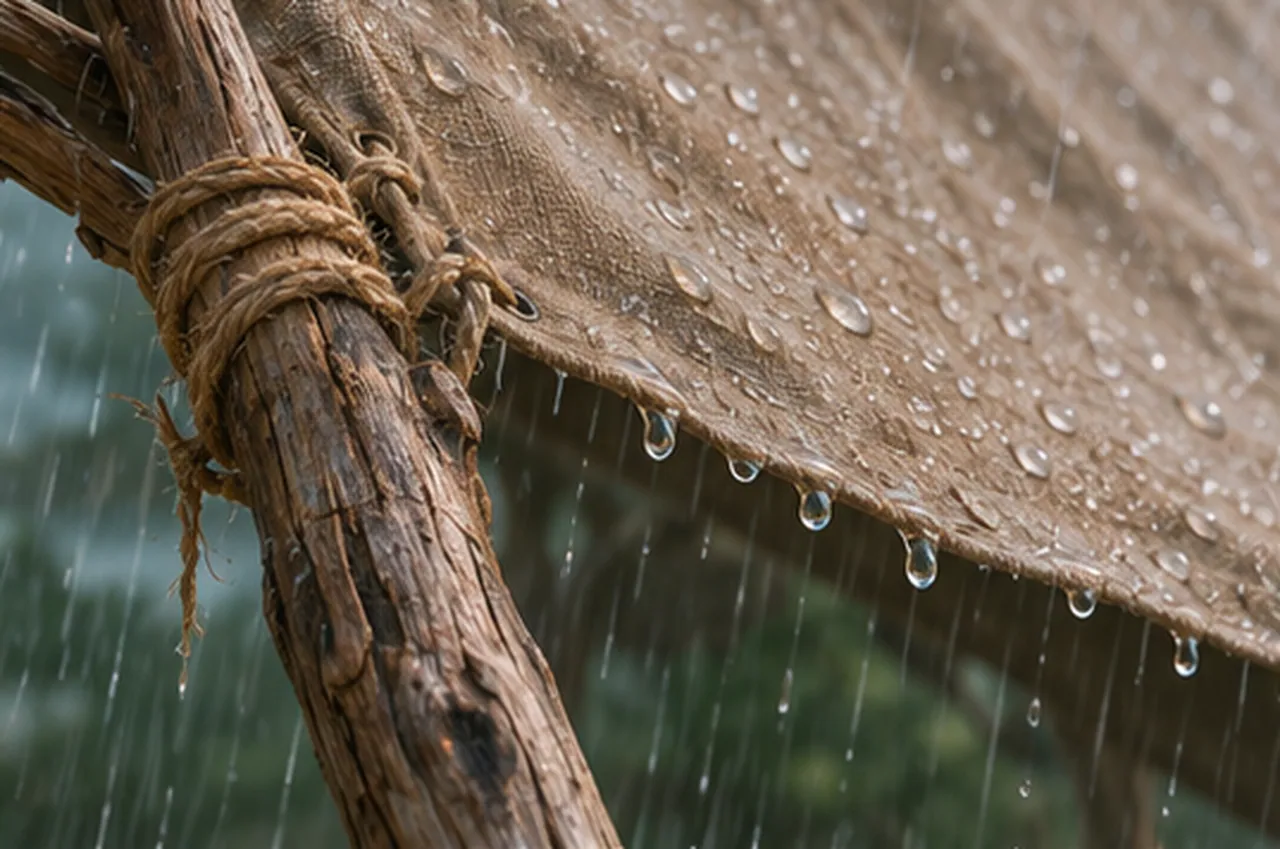
At the start of this replay the lower side of the cloth hangs above a dry patch. A thin dark line of early rain appears on the side nearest the rock. From the cove you can read the change as a part of the storm. Standing right beside the seam you can see one series of drops leave the front edge and another run along the underside. We made the test so the player could compare those two motions before deciding whether the objects already under the cover could still rest in the same place. The details come from the fictional weather system in the game prototype.
Return to the first brief shower
In the original pass the rain changed all at once. The shape of the drop was suddenly visible against a broad dark wall, even before the rest of the view had changed very much. It looked like something had hit the cloth rather than accumulated at its edge. We moved the first appearance of water to a lower area and repeated the sample from the other side of the shelter. This time the leading drops followed a visible seam. The later pattern appeared after a short wet line grew across the fabric. We could read the development from inside and from the lower part of the path.
The most visible area is on a small outward corner in the cover. A castaway can turn beneath it and find a container against a rock. When the front edge starts to shed water there is a short stretch where several drops fall in roughly the same place. A later position leaves them closer to the floor of the shelter. Moving the load sooner reveals an opportunity near the back wall. We preserve that search as an action a player can take while the remaining dry space is changing. Seeing the direction is more useful than being shown a symbol which only says a place is wet.
Compare the full edge, then the immediate cue
Our longer side view makes most of the cloth visible. An area near the middle stays bright. The front drops fall from a notch that lies closer to the lighter edge in the earlier frame. We darkened the foreground a little during the rain. This makes it possible to see the point at which a nearby drop briefly sits against the shadow. The full edge holds the same broad shape. In the first version the transition used a lot of flutter, which gave the player a poor chance to make a comparison. We slowed that part without leaving the water static.
The near view is useful for a different question. When the water gathers at the underside you can move just far enough to see how the back of the load is placed. A later line runs near it. The player might recognize the mark from the load that came back earlier. If they are unsure which object is affected, we let them return to the full view and find the same corner of the support where it meets the ground. Both views show evidence from the same point in the game, so putting them side by side gives more useful detail than replacing an earlier stage with a completely new camera.
Bring the rain catch back
Before the First Downpour starts with an available route to one visible catch. A Place for the Dry Load looks at where the objects you return with can sit. The next iteration connects this drop pattern with the earliest moment a wrapped thing becomes hard to recognize against the wet rock. We want the player to be able to explain the change by finding an old reference first, then pointing to which portion of the cover has started to shed differently near that corner.